Ants Control
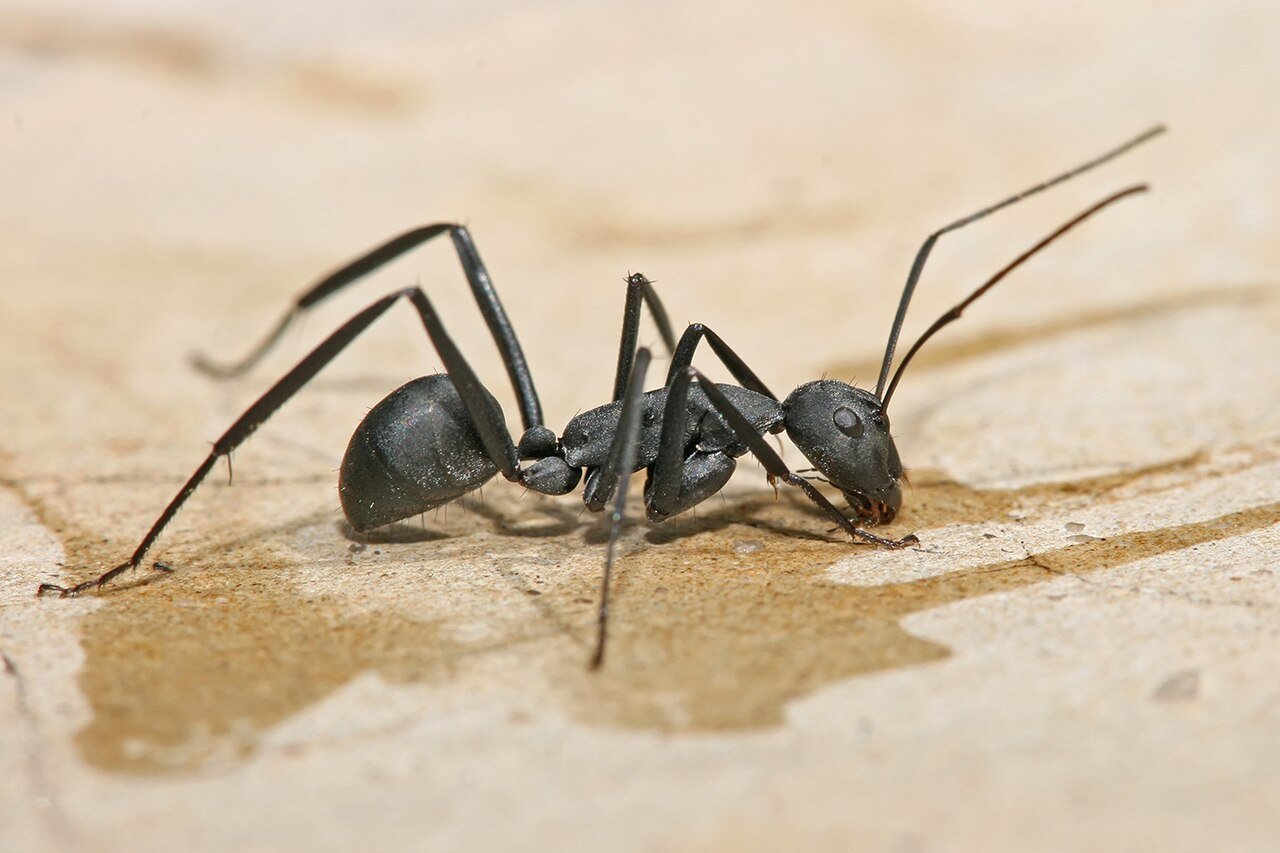
Around Spokane and Coeur d'Alene, the ant doing real structural damage is the western black carpenter ant, Camponotus modoc: big, matte-black workers with reddish legs that carve smooth galleries through damp or decaying wood. They do not eat the wood, they excavate it, and a home infestation is usually a satellite colony with the parent nest up to a hundred yards away in a stump or dead log. The WSU, OSU, and University of Idaho joint publication PNW624 lists them alongside odorous house ants (Tapinoma sessile), which trail into kitchens for sweets, and moisture ants (Lasius pallitarsis), which move into wood already softened by rot. Carpenter ant colonies can reach tens of thousands of workers, and they forage mostly after dark, so a quiet kitchen at noon tells you nothing. Knock on suspect trim and listen: disturbed carpenter ants make a faint rustling inside the void.
⚠ Signs of Activity
- Piles of sawdust-like frass (wood shavings and insect parts) below windowsills, baseboards, or deck posts
- Winged swarmers, or discarded wings, indoors in spring, a sign a mature colony is nearby
- Faint rustling or crinkling sounds inside walls or hollow doors at night
- Steady trails of small dark ants moving between the foundation and kitchen sweets or pet food
🎯 Our Treatment
We run recon inside and out to find the parent colony and its satellites, then hit the voids directly with targeted treatments and non-repellent transfer products, and call out any moisture-damaged wood that invited them in.
🛡 Prevention
- Fix roof, plumbing, and crawl space leaks so wood stays dry and uninviting
- Trim tree limbs and shrubs so nothing bridges from vegetation to the siding
- Store firewood and lumber off the ground and well away from the foundation
- Wipe up crumbs, seal sweets, and keep pet food in hard containers with lids
Also operating in your region.



Seeing ants? Let's end it.
Same-day service available. Free quotes, transparent pricing, 90-day warranty.
