Wasps & Hornets Control
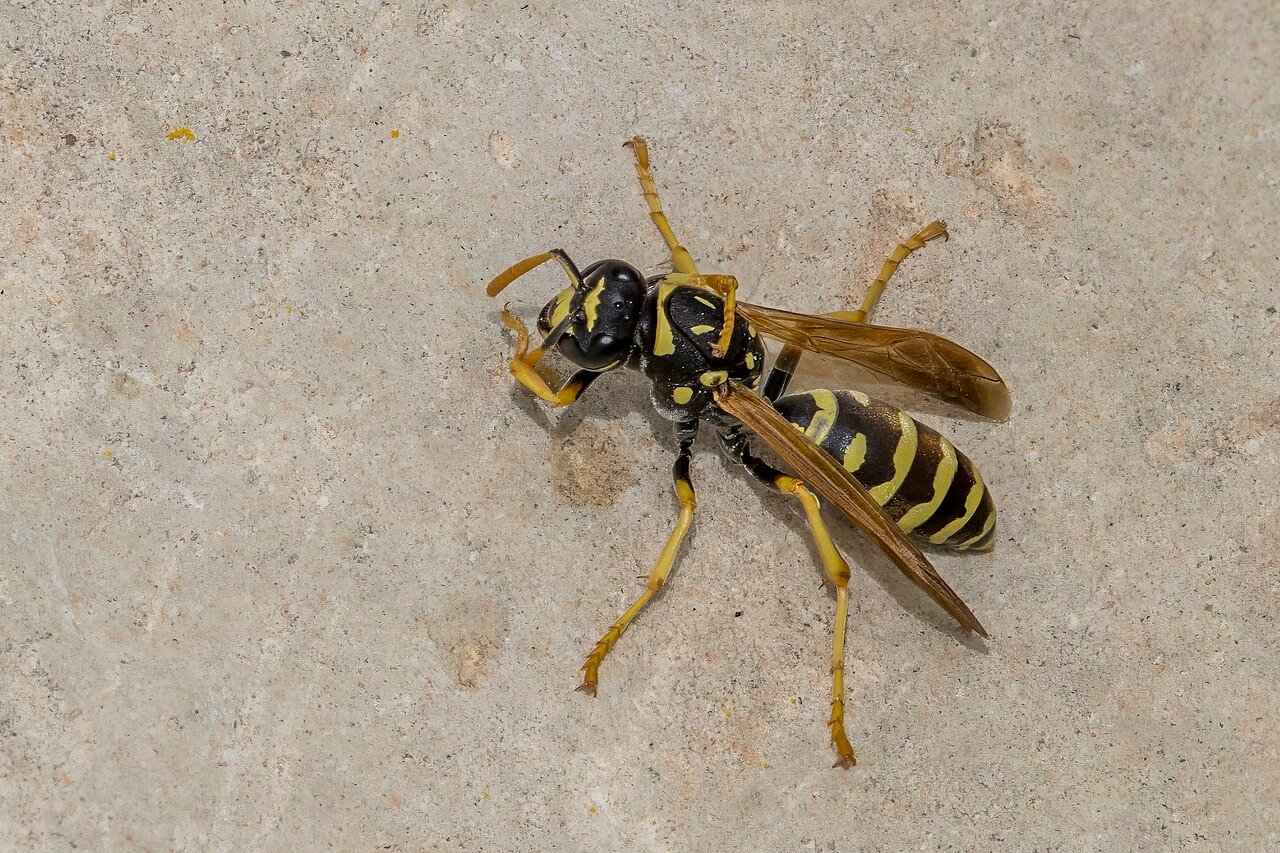
The paper wasp most Inland Northwest homeowners meet is the European paper wasp, Polistes dominula, an introduced species that WSU's extension fact sheet describes as well established across the Pacific Northwest. It builds the classic open-comb umbrella nest, a single layer of papery cells hanging from eaves, deck rails, play structures, and grill covers, starting in spring from a lone overwintered queen and growing to a few dozen workers by late summer. These wasps are yellow-and-black, slender, with long legs dangling in flight, and they are beneficial predators that hunt caterpillars in gardens all season. They are also the wasp most likely to sting a homeowner, because their nests hang exactly where hands and heads go: under eaves, around door frames, and inside sheds. Unlike yellowjackets they are not aggressive away from the nest, so a wasp working your flower beds can be left alone, but a nest over the back door cannot.
⚠ Signs of Activity
- Open umbrella-shaped paper combs hanging under eaves, deck rails, or play equipment
- Slender yellow-and-black wasps with dangling legs scraping wood fiber from fences and decks
- Wasps hovering persistently around door frames, sheds, and grill covers
- A single large queen working a small starter nest in early spring
🎯 Our Treatment
We treat the nest in the evening when workers have returned, remove the comb, and close off the eave voids and cavities so the next queen cannot rebuild in the same spot.
🛡 Prevention
- Walk eaves and structures in spring and knock down golf-ball-sized starter nests early
- Seal gaps in eaves, soffits, and around door and window frames
- Keep trash cans sealed and food covered during late-summer cookouts
- Leave foraging wasps in the garden alone and act only on nests near people
Also operating in your region.



Seeing wasps & hornets? Let's end it.
Same-day service available. Free quotes, transparent pricing, 90-day warranty.
