Why Ants Invade in Spring (and How to Stop Them)
Ants scout for food and water as temperatures rise. Here's how to cut them off before they establish a colony.
Every April, kitchens around Spokane and Coeur d'Alene get the same unwelcome visitor: a thin line of ants marching across the counter like they pay rent. It starts with one or two scouts. As soil temperatures climb, colonies wake up hungry and send workers out looking for food and water. A single scout that finds a reliable source lays down a pheromone trail on the way home, and within days the whole foraging force is following that chemical highway straight into your kitchen.
Understanding that trail is the key to beating them. The ants you see are a tiny fraction of the colony. Kill every visible ant with spray and the colony simply sends more, because the queen underground never stops laying eggs. To actually end an ant problem, you have to either eliminate the colony or cut off what is drawing it inside.
The two ants you will meet in the Inland Northwest
Odorous house ants are the small brown ants behind most kitchen invasions. They love sweets, nest just about anywhere, and are famously hard to eliminate because their colonies hold multiple queens and constantly split off new nests, a habit called budding. In cooler climates they often overwinter inside wall voids, which is why they can seem to appear from nowhere in spring. Crush one and it gives off a rotten coconut smell, which is how they got the name.
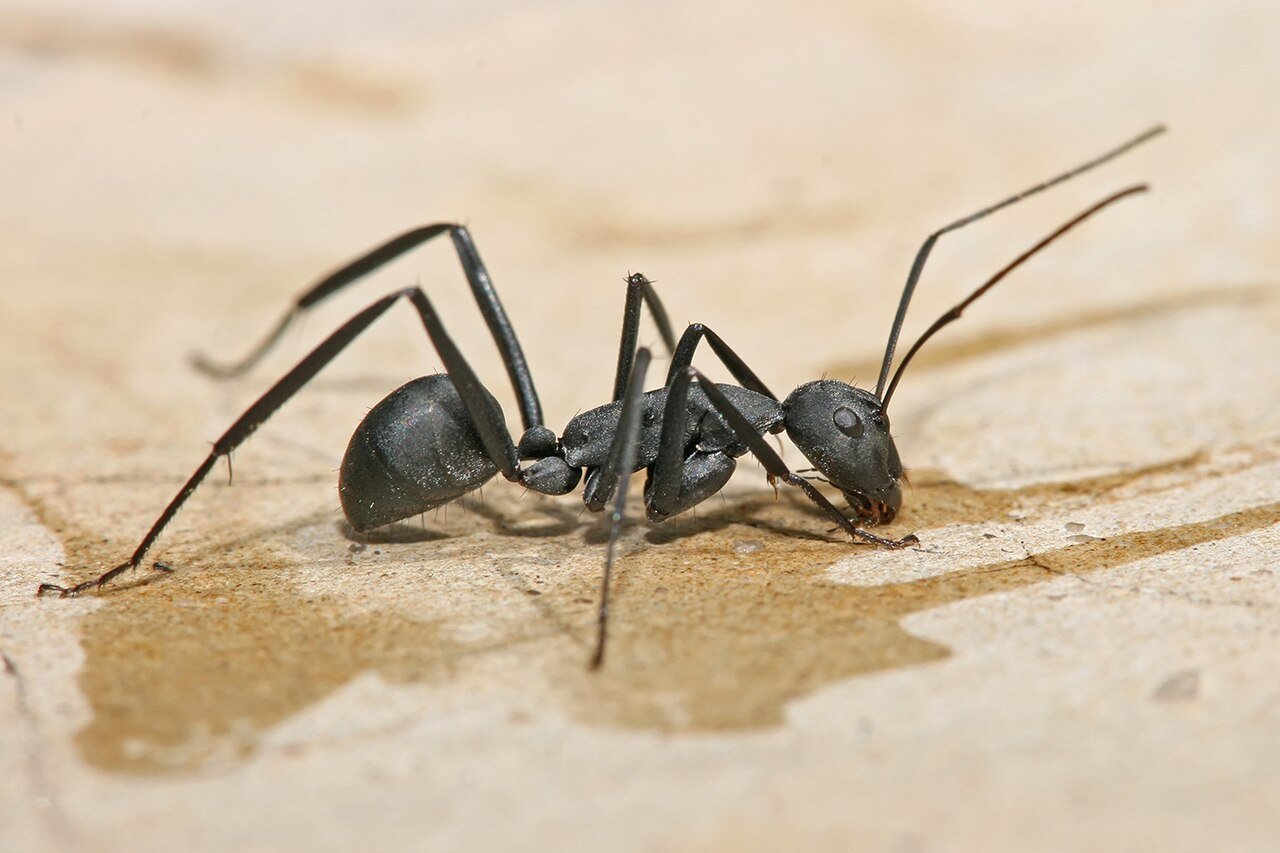
Carpenter ants are the big ones, black or reddish and up to half an inch long, and they are a different problem entirely. They tunnel into wood to build nests, starting with damp or decayed wood around leaks, windows, and decks but expanding into sound framing. Look for small piles of coarse sawdust below windowsills and baseboards, and listen for faint rustling inside walls at night. A carpenter ant problem is a structural problem, and it usually calls for professional help.
Why the spray can is not the answer
Contact sprays kill the ants you can see and leave the colony untouched. Worse, spraying repellent insecticides around odorous house ants can scatter the colony and trigger budding, turning one nest into several. University of Nebraska entomologists put it plainly: sprays might kill the ones you are seeing, but you are not getting rid of the problem because you are not getting rid of the nest.
Baits work the opposite way. Foraging ants carry the slow-acting bait back and feed it to the colony, including the queen. When the queen dies, the colony collapses. Enclosed bait stations are also the safer option around kids and pets, since the pesticide stays inside the station instead of drifting wherever a spray lands.
The plan that actually works
- Wipe down the trails. Ants navigate by pheromone scent, so clean counters, baseboards, and floors along their route with a household cleaner to erase the trail.
- Vacuum up the ants you see instead of squishing them, which avoids spreading scent and alarm signals.
- Store food, especially sweets, cereal, and pet food, in airtight containers. Do not leave pet bowls out all day.
- Fix the moisture. Repair leaks, keep gutters clear, and ventilate crawl spaces. Damp wood is what invites carpenter ants.
- Seal entry points with caulk around the foundation, windows, and where pipes enter the house. Trim vegetation touching the siding.
- Place enclosed ant baits along active trails and at entry points, following the label exactly. Give them a week or more to work. A bait that kills too fast never reaches the queen.
One last distinction: ants you see only in spring and summer usually nest outdoors and are commuting in for food, so sanitation and exclusion often solve it. Ants present year-round, especially large carpenter ants in winter, usually mean the nest is inside your walls. That is the point to call a professional rather than fighting a colony you cannot reach.
